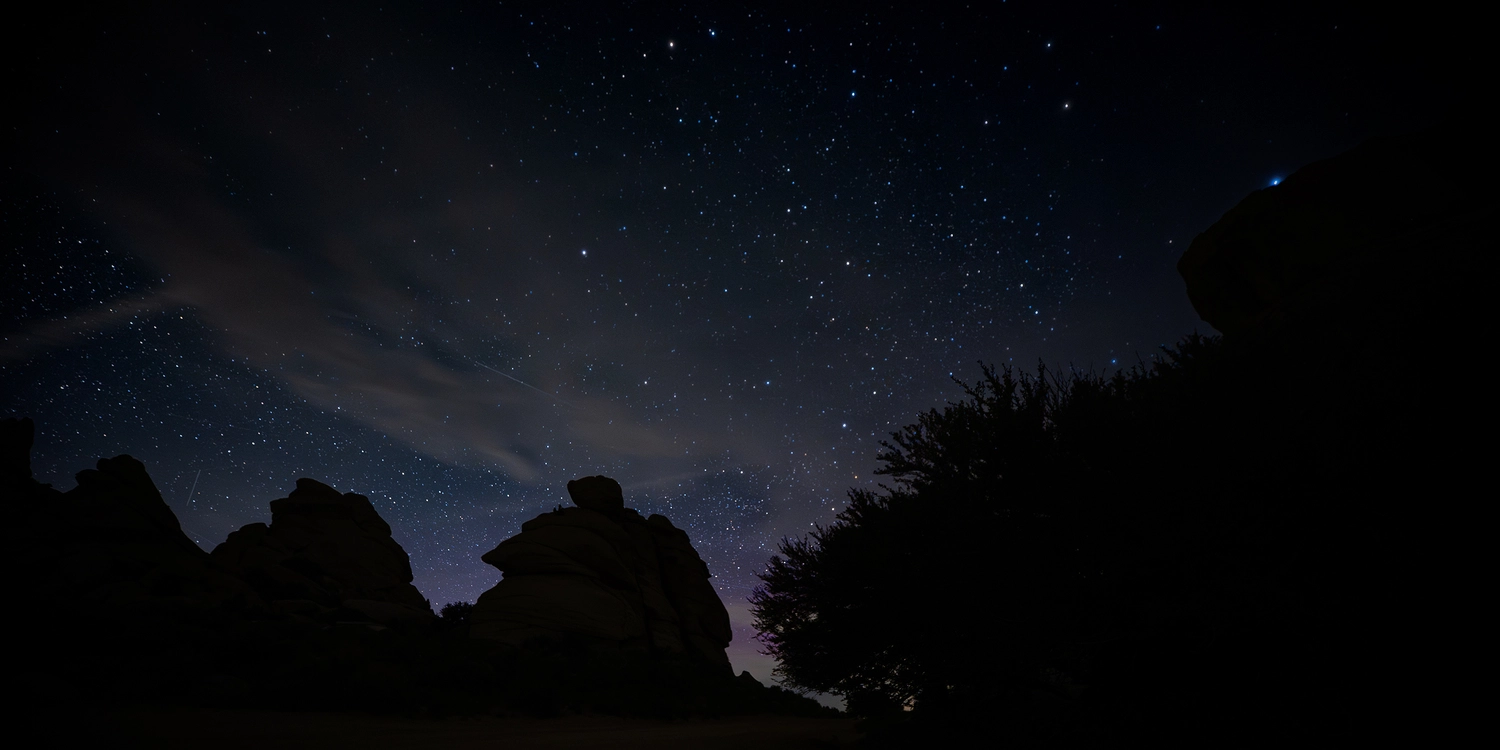
City of Rocks New Moon Astrophotography Under Idaho Stars
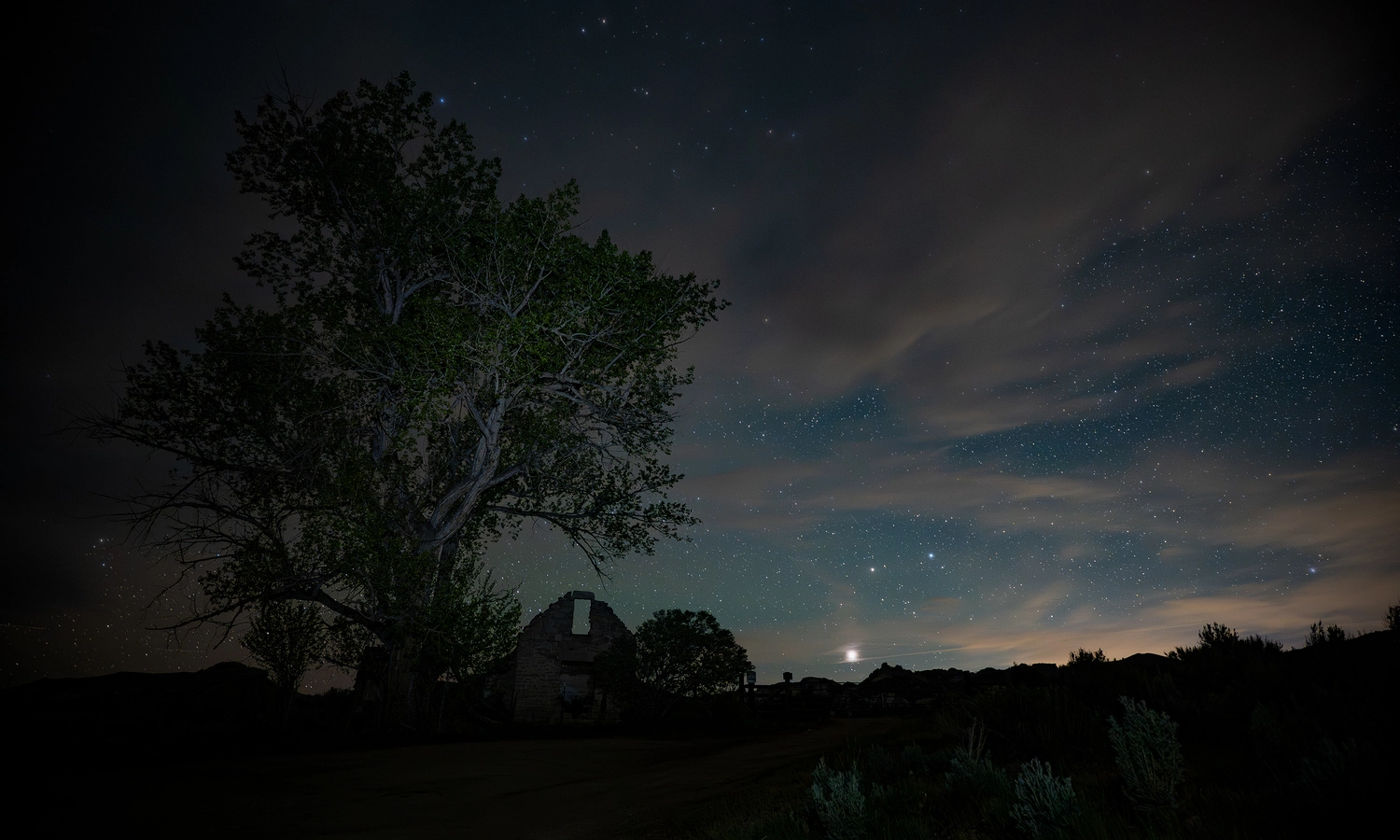
Dark Skies Return to City of Rocks
My fourth return to City of Rocks (again) under a new moon, and this place still stops me cold. City of Rocks delivers something rare in Idaho's crowded astrophotography conversation — genuine, unfiltered darkness that makes you feel small in the best possible way. I timed this trip around the new moon specifically, chasing that ink-black window when the Milky Way burns brightest against the granite spires. The weather wasn't cooperating fully — clouds rolled in from the southwest, and a distant glow from Twin Falls bled faintly along the horizon — but even then, the sky here performed. Every star that should be visible was visible. The ancient rock formations rise like silent sentinels around you while you work your tripod, and the silence is so complete you can hear your own shutter click echo off the stone. If you're serious about dark sky photography in Idaho, City of Rocks National Reserve belongs at the top of your list. I keep coming back because nothing else in the region compares.
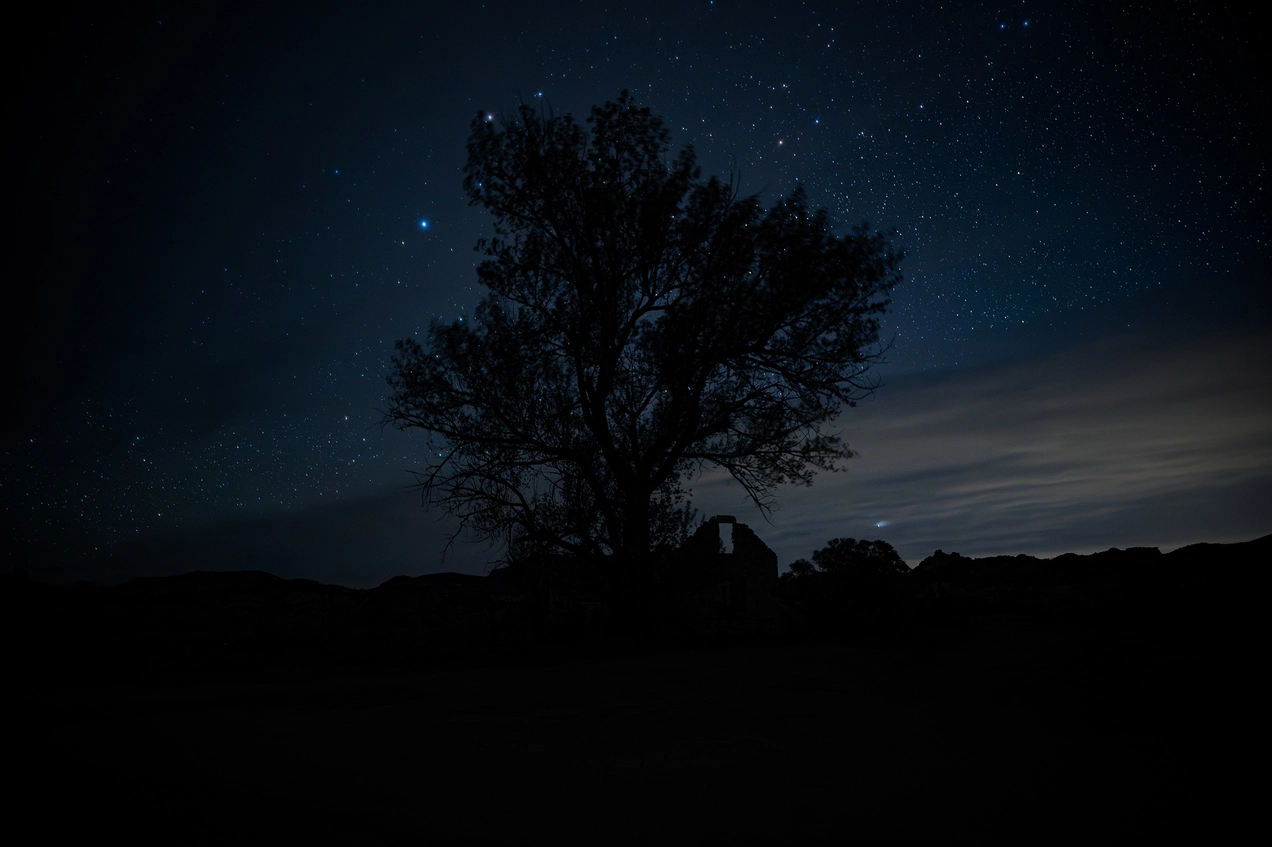
Into the Dark: Granite, Stars, and Silence
The Nighttime Arrival Ritual
The drive into City of Rocks after dark is its own kind of ritual. You drop off the main highway and the road narrows, the sagebrush pressing in close on both sides, and somewhere around the last cattle guard before the reserve boundary, the sky simply opens.
I have made this approach four times now, and I still pull over at that same bend: the one where the granite domes first appear as dark silhouettes against the star field. I stop just to stand outside the car for a moment and let my eyes adjust. The air at elevation carries a particular quality in late spring and early summer: thin, dry, faintly mineral, with a cold edge that bites through a fleece layer faster than you expect.
According to Idaho Parks and Recreation, which co-manages the reserve, City of Rocks sits at roughly 6,000 to 8,000 feet across its terrain. You feel every foot of that altitude in your lungs when you are hauling a tripod and a full camera bag across uneven ground in the dark. The granite formations, some of them 2.5 billion years old, absorb the cold and radiate it back at you.
When you press your palm flat against a boulder to steady yourself on a scramble, the stone feels ancient in a way that is hard to articulate. Dense. Permanent. Indifferent to your presence in the most humbling way.
Chasing the Milky Way at Twin Sisters
I set up my first composition near the Twin Sisters formation, working the foreground rocks into the frame while the Milky Way core climbed higher in the southeast. The clouds that had been threatening all evening were moving in broken waves. This was frustrating for long exposures but occasionally dramatic, creating the kind of atmospheric interference that turns a clean sky shot into something with actual tension.
I was shooting wide open at f/2.8, pushing ISO to 3200, pulling 15-second exposures, and checking the histogram obsessively between shots. The silence out here is not the comfortable silence of a backyard; it is the silence of genuine remoteness, and it has weight. You become acutely aware of small sounds:
- The click and mirror slap of the shutter
- The crunch of your boot on decomposed granite
- The occasional creak of cooling rock
For anyone researching the specific terrain and approach routes before a trip, the City of Rocks entry on Wikipedia provides useful geographic context on the California Trail corridor that cuts through the reserve. The same wagon ruts that 19th-century emigrants carved into the stone are still visible.
The Cold and the Creative Pivot
By midnight the temperature had dropped hard and fast. It was the kind of cold that makes your fingers clumsy on small camera dials and turns every breath into a visible cloud. I retreated to the car between compositions, running the heat for ten minutes at a stretch, fogging the windows, and then wiping them down before the next attempt.
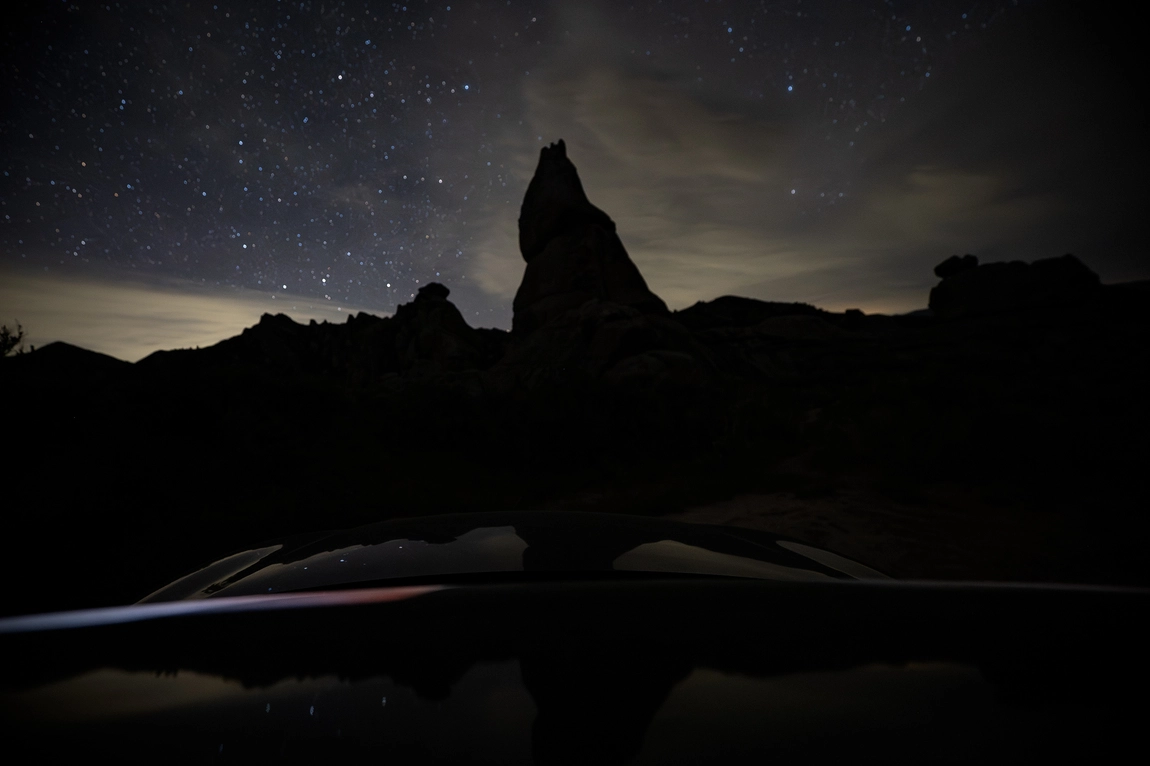
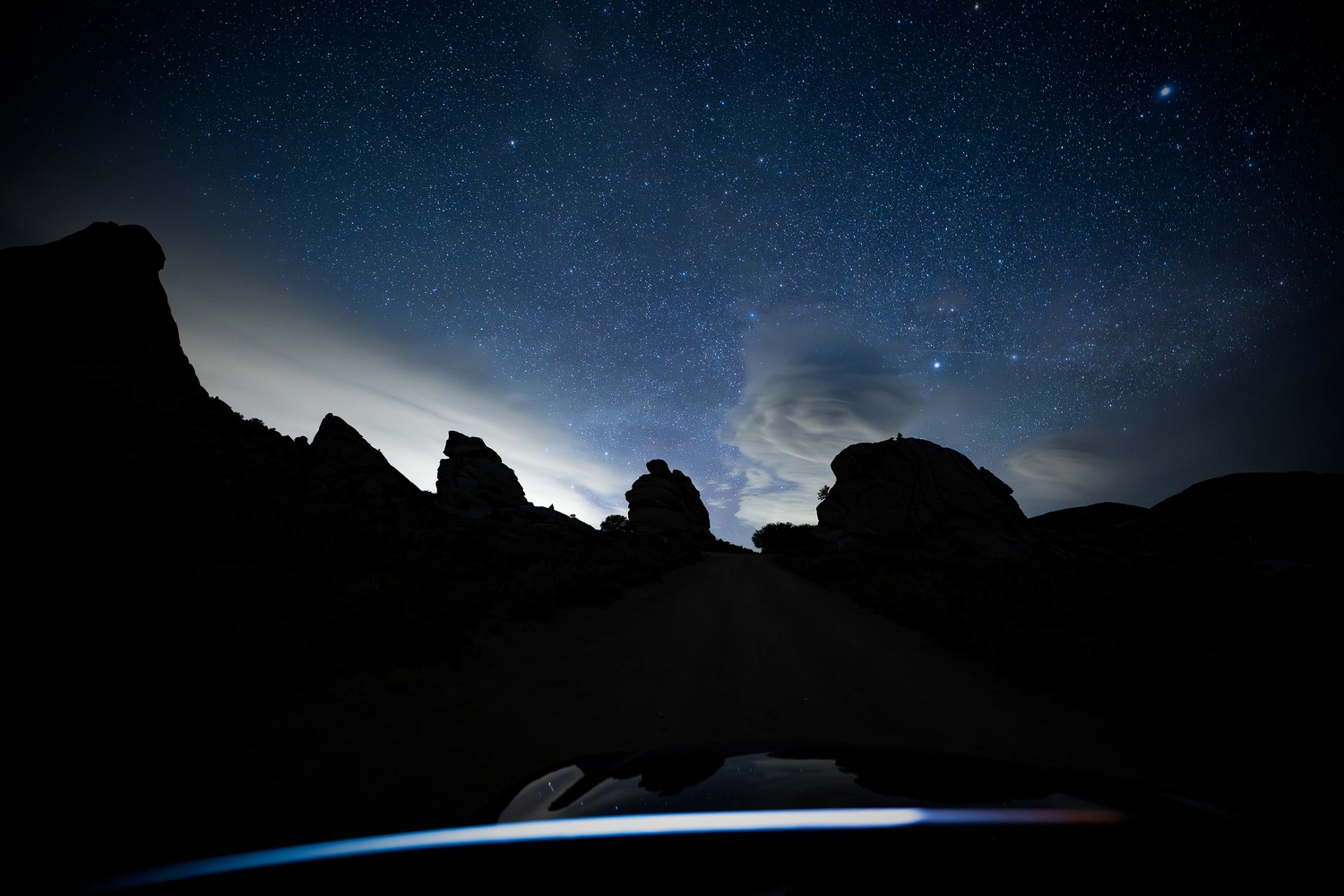
What started as a practical concession to the cold gradually became its own creative constraint. Shooting through the windshield, I noticed the way the glass caught faint star trails and scattered them into soft halos. The hood of the car, still warm from the engine, collected a thin layer of condensation that reflected the sky in long, smeared streaks of light. I started framing deliberately with the car as part of the composition:
- The curve of the hood anchored in the lower third
- The granite spires rising beyond the glass
- The Milky Way arching overhead in whatever gaps the clouds allowed
City of Rocks doesn't reward passive observation. It asks something of you, and on this trip, what it asked was adaptability.
Those car-window frames ended up being some of the most interesting images from the entire night. There is something profoundly honest about them: they document the actual conditions, the actual temperature, and the actual experience of being out here when the environment pushes back. I gave the landscape adaptability, and the sky gave back accordingly.
A Beautiful Combination for Astrophotography
By the time I packed up for the night, the cold had settled deep into the bones of the landscape and my own. The last images on my memory card were not the pristine, textbook nightscapes I’d envisioned, but something more layered: the Milky Way fractured by windshield glass, the granite domes rendered in silhouette behind the blurred arc of headlights, the condensation on the hood catching stray starlight. These photos are imperfect, but they’re honest—evidence of the real conditions, the real challenges, and the quiet improvisations that wilderness always demands. City of Rocks is not a place that yields easily to comfort or control; it insists on presence, on humility, on a willingness to adapt. That’s part of its gift.