Table Rock Sunset Views With Fall Colors in Full Bloom
Where Table Rock Blazes With Autumn Fire
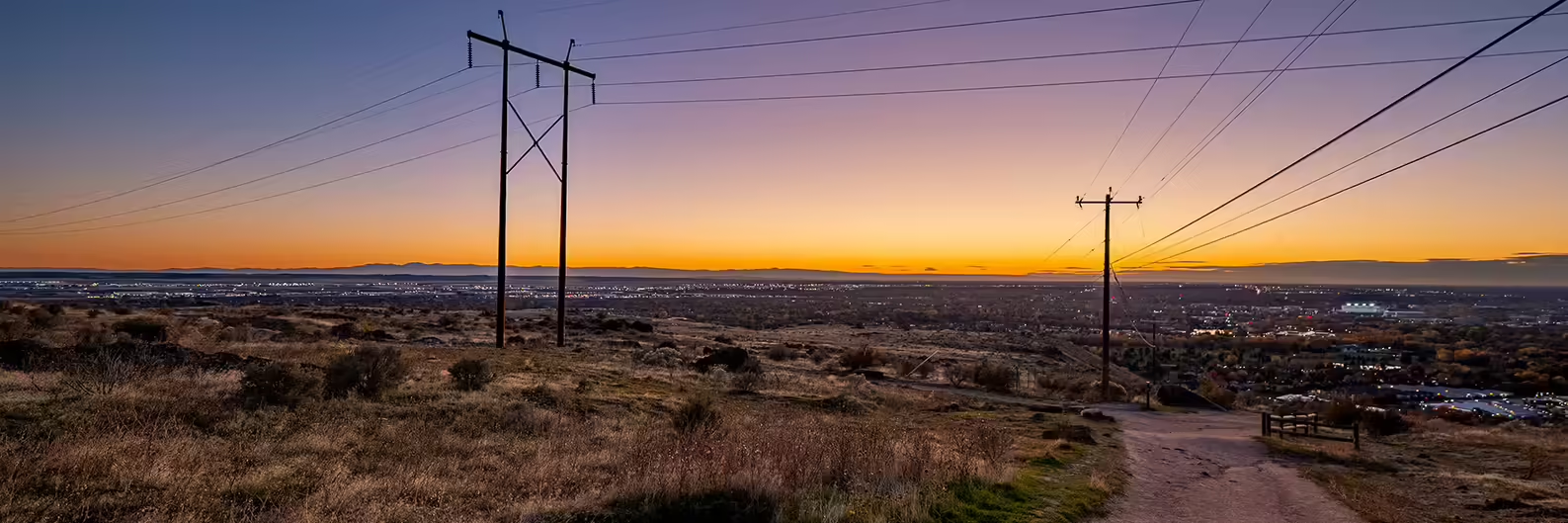
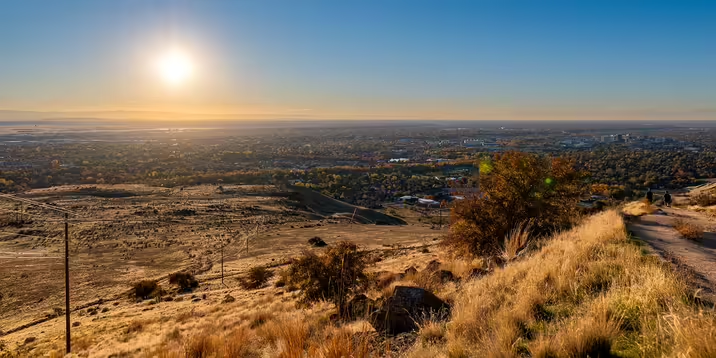
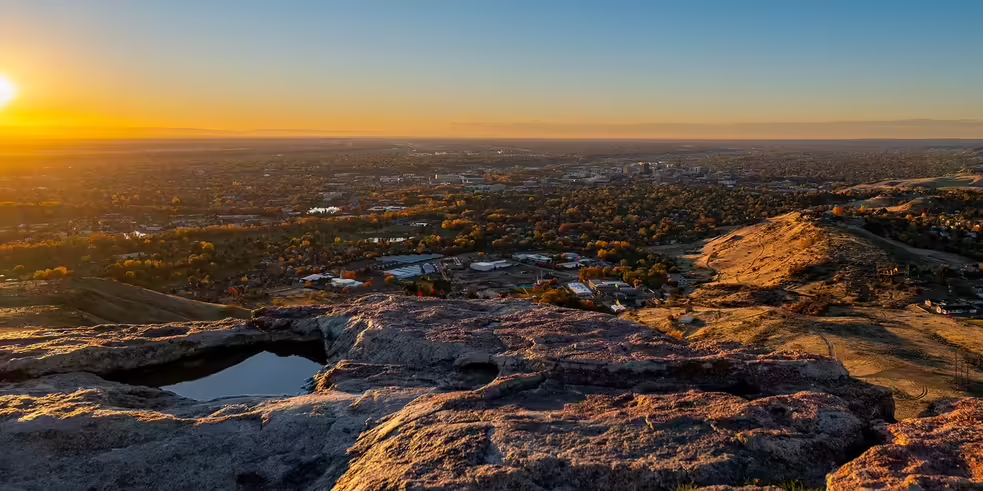
The drive up to Table Rock had that particular kind of quiet urgency that only comes with chasing a sunset — you're always racing something you can't quite see yet. Table Rock rewarded the effort that evening, standing open and exposed under a sky that had stayed mostly clear all day, the kind of blue that deepens fast once the sun starts dropping toward the ridge line. The air carried a sharp edge to it, that unmistakable October bite that reminds you the mountains don't ease into winter — they lunge at it. What stopped me in my tracks, though, was the color still holding in the valley below. Amber, rust, and a stubborn deep green clinging to the slopes in long, uneven bands. I worked my way out to a vantage point I hadn't used before, a ledge that pushed me out over the canopy and opened up the full sweep of the landscape. The light came in low and warm, and the shots I pulled from that spot turned out to be some of the strongest landscape work I've done all season.

Where the Light Broke Open Below
The Ledge and the Canopy
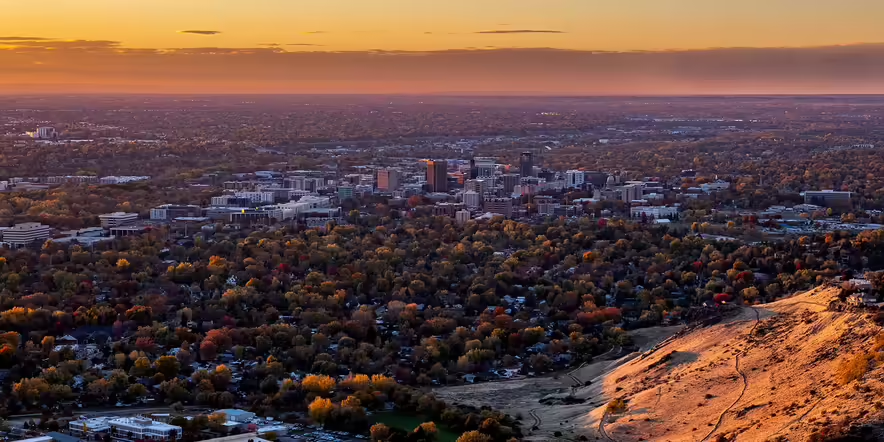
The ledge I had found sat maybe thirty feet out from the main trail. It was a narrow shelf of exposed sandstone that required a careful sidestep along a crumbling lip to reach, but it was worth every cautious footfall. From there, the Treasure Valley opened up in a way that the main overlook near the cross never quite delivers: no fencing to shoot through, no other hikers crowding the sightline, just raw elevation and a canopy that rolled out across the city below me like something poured.
The changing leaves were putting on a brilliant display:
- The Oaks and Cottonwoods: Holding their amber longest, forming dense clusters of warm gold that caught the low-angle light and seemed to generate their own glow from within.
- The Maples: Already peaked and beginning to thin, their rust-red leaves dropping in slow, unhurried spirals whenever a gust moved through the foothills.
I could feel the cold coming up off the rock itself, radiating out of the stone the way sandstone does in late October. This was not wind chill, but something older and more settled than that. I shot wide first, trying to capture the full sweep of the valley and the Owyhee Mountains in the distance before the light shifted, then worked my way tighter, isolating individual tree clusters where the color contrast was sharpest against the darkening sky.
Chasing the Dropping Light
The light moved faster than I expected. That is always the thing about golden hour at elevation: you think you have more time than you do, and then the angle drops two degrees and everything changes.
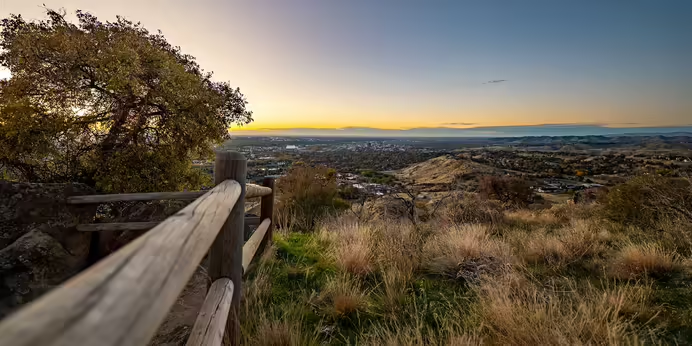
I repositioned twice, moving back toward a slight rise in the rock that gave me a cleaner foreground and let me use the natural curve of the slope as a leading line down into the city. According to the Table Rock trail overview on AllTrails, the summit sits at 3,650 feet. You feel every one of those feet when the temperature starts dropping in the foothills after sundown.
My fingers were stiff enough by the second repositioning that I was fumbling with the lens cap, my breath fogging the viewfinder if I got too close. I kept shooting anyway.
The sky behind the western horizon had gone from blue to a deep bruised violet, and the warm tones in the Treasure Valley below were doing something extraordinary in contrast: holding their fire while everything above them cooled.
The Dark Descent
I stayed on that ledge longer than was probably wise given the light I would need to hike back down to the Old Penitentiary trailhead. The trail down from the summit is heavily trafficked but unforgiving in the dark. The Ridge to Rivers trail system, which manages the Boise foothills, notes that the upper sections involve steep, rocky grades and loose dirt that demand attention even in daylight.
I knew all of this and stayed anyway, because the last ten minutes of that sunset were doing something I had not seen all season. The color in the valley below had shifted from amber to something closer to copper, almost metallic. The shadows pooling in the hollows between the foothills gave the whole landscape a depth that felt almost three-dimensional through the viewfinder. I bracketed exposures, shot in bursts, and at one point just put the camera down and stood there with my hands in my jacket pockets, watching it happen without a lens between me and it.
By the time I finally turned back toward the trail, the sky had gone fully dark at the zenith, and the western horizon was holding just a thin band of deep orange. I picked my way back carefully with my headlamp cutting a narrow tunnel through the dark. The cold had settled in completely, and the sagebrush around me had gone quiet in that particular way it does after the birds stop and before anything nocturnal starts.
The shots were already sorting themselves in my head: the ones I knew were strong, the ones I would have to work with in post, and the few that I suspected might be something more than I had planned for when I left the trailhead that afternoon.
Leaving Table Rock, Carrying the Light Forward
Looking back at the images from that evening, I’m struck by how much my eye for editing has sharpened over the past year. Framing, timing, and shot selection are the bones of any good photograph, but it’s in the quiet work of transforming a flat, gray raw file—pulling out the subtle warmth in the canopy, deepening the shadows in the hollows—that a scene truly comes alive. My favorite shot from the day is one of the rolling hills unfurling toward the city, the last light catching on the gold and copper leaves, the landscape layered and luminous. It’s a reminder that the most memorable moments often come from stepping off the main path, lingering a little longer, and letting the place reveal itself in its own time.